Tuesday, May 21, 2013
facebook1 twitter1 linkedin1 you-tube1 rss1 mail1

China (146)

Wednesday, 03 April 2013 03:29

Can member states develop a meaningful trade agenda?

By Peter Draper
Don't talk to me about giblets," International Relations and Co-operation Minister Maite Nkoane-Mashabane reportedly said during last week’s Brics (Brazil, Russia, India, China and South Africa) business summit. This remark reveals several things about the nature of the Brics forum, and co-operation on trade matters in particular.
Wednesday, 27 March 2013 00:00

SA youth stand to be counted at the BRICS summit

By CCTV Africa
Last week Youth@SAIIA learners Morategi Kale and Thokozani Nhlapo were given the chance to interview delegates of the BRICS Summit for a special segment on CCTV. CCTV's Guy Henderson produced this story for the Africa Live current affairs show. Watch the creation of the SAIIA BRICS Youth Communiqué in the CCTV clip above. 
Tuesday, 26 March 2013 20:00

Unpacking South Africa’s BRICS in Africa equation

By Memory Dube and Mzukisi Qobo
In a move that has generated much excitement, South Africa has invited representatives from various African continental institutions, including regional economic blocs to the Brazil, Russia, India, China and South Africa (BRICS) Summit (26-27 March 2013). BRICS leaders will meet  them to discuss Africa’s infrastructure development priorities under the New Partnership for Africa’s Development (NEPAD) framework. This is in line with the Summit theme, “BRICS and Africa - partnership for development, integration and industrialisation”.
Monday, 25 March 2013 22:00

BRICS FDI: A Preliminary View

By Economic Diplomacy Research Team

by EDIP Research Team
SAIIA Policy Briefing 63, March 2013

Monday, 25 March 2013 22:00

2013 BRICS Youth Communique: The Proposed BRICS Development Bank

By Desiree Kosciulek
On 16 March 2013 SAIIA brought together outstanding South African high school learners to host their own model BRICS Summit to discuss the creation of the BRICS Development Bank. Each school represented one of the five BRICS countries in a special negotiation session that resulted in the creation of a BRICS Youth Communiqué.
Thursday, 21 March 2013 22:00

BRICS Voices - Youth views on the BRICS

By SAIIA
In the lead-up to the Fifth Summit of the BRICS (Brazil, Russia, India, China, South Africa) grouping, the South African Institute of International Affairs (SAIIA) invited high-school learners to debate the key issues surrounding the BRICS and develop a Youth BRICS Communique containing their recommendations.
Wednesday, 20 March 2013 22:00

BRICS Video Voices: New Insights on BRICS trade agenda

By SAIIA
In a new series of video interviews, a special panel of experts present fresh insights into the five BRICS countries (Brazil, Russia, India, China, South Africa) and their relationship with Africa. The latest interview is with Brendan Vickers from the Department of Trade and Industry in South Africa, on the BRICS trade agenda, above.
Wednesday, 20 March 2013 07:26

5th Annual BRICS Summit: Not a new case of club diplomacy

By Catherine Grant-Makokera
There has not been a group of countries who have come together in recent years and quite captured the imagination like the BRICS. Brazil, Russia, India, China and South Africa would have seemed like unlikely bedfellows in the not-too-distant past but they are now actively pursuing a common agenda that covers a wide range of political, economic and social issues. The potential collective power that these countries could wield in global governance terms is causing some consternation in the traditional powers of Europe and the United States of America. This is reflected by academic commentators and popular media who cynically…
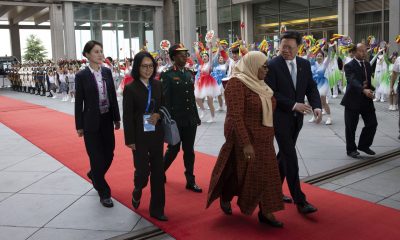
Last week rung in the changes in China’s top leadership positions as Xi Jinping replaced Hu Jintao as China’s new president. President Xi is also the general secretary of China’s Communist Party and chairman of the Central Military Commission. In one of his first visits abroad as head of state, President Xi will be undertaking a state visit to South Africa on the margins of the upcoming BRICS Summit on 26-27 March 2013 in Durban. He will also be visiting Tanzania and the Republic of Congo during his African tour. China’s relationship with the African continent has grown significantly under…
Monday, 25 February 2013 07:44

The BRICS and the New World Order: A Beginner's Guide

By SAIIA
As South Africa gears up to host the Fifth Annual BRICS Summit next month, SAIIA has released a comprehensive new BRICS Guide to help observers understand the dynamics at play. This resource was created by the Global Economic Governance - Africa (GEGAfrica) project, an initiative of the South African Institute of International Affairs and the University of Pretoria, in association with CUTS International in India. Called "The BRICS and the New World Order: A Beginner's Guide", it is an electronic resource on the BRICS grouping (Brazil, Russia, India, China and South Africa). It covers: The origin of BRICS The evolution…

SAIIA Occasional Paper No 134, January 2013

SAIIA Occasional Paper No 131, January 2013

Monday, 17 December 2012 20:00

The BRICS in the Emerging Global Economic Architecture

By Biswajit Dhar

SAIIA Occasional Paper No 125, December 2012

Monday, 26 November 2012 05:00

The Mamba and the Dragon: Mozambique-China Relations in Perspective

By SAIIA and IESE
(Portuguese) China’s rising position in African affairs, from that of quiescence to open activism at the centre stage of events, is changing the dynamics of the international system.  Since the onset of the domestic reform process starting in 1978, Maoist faith and revolutionary altruism have given way to the consciously self-interested commercial entrepreneurs and advocates of forms of market capitalism. The emergence of China as Africa’s top trading partner and leading source of foreign direct investment in 2009, surpassing the United States and key European Union states still struggling in the aftermath of the global financial crisis, has sharpened the focus on Chinese aspiration and conduct in Africa.  Two-way trade is surging, from just over $1 billion in 2000 to US$155 billion in 2010.  African leaders have recognized, perhaps belatedly in some cases, the necessity of closer ties with the rising economic giant, calling for a concerted effort to better understand and utilize the opportunities presented by China.
Thursday, 15 November 2012 08:30

China-South Africa: Unpacking a Strategic Partnership

By Yu-Shan Wu
On 14 November the South African Institute of International Affairs co-hosted a public event with the Heinrich Böll Foundation (HBF), which unpacked the China-South Africa relationship. The event brought together an array of academics, journalists and policymakers from across Africa and abroad. It sought to make sense of the comprehensive strategic relationship between China and South Africa that has culminated since diplomatic relations officially established in 1998.
Monday, 12 November 2012 03:03

What Does the Obama Victory Mean for Global Economic Governance?

By Peter Draper
The jubilant reaction in some South African quarters to Barrack Obama’s re-election as US President is understandable. Unlike his Republican counterparts Obama represents social inclusion, a fact borne out by the multi-ethnic constituency the democratic party sewed together, and which looks set to strengthen as the demographic balance in the US swings inexorably away from the white majority.
Monday, 29 October 2012 09:26

South Africa must be pragmatic about BRICS

By Catherine Grant and Peter Draper
South Africa will host the fifth Brics (Brazil, Russia, India, China, South Africa) summit in March next year. What should the government's priorities be? This is a subject of earnest discussion in government, business and civil society circles.
Thursday, 25 October 2012 23:32

New Book: The Mamba and the Dragon: Mozambique-China Relations in Perspective

By Chris Alden, Sergio Chichava
A new book on China-Mozambique relations, A Mambo e o Dragao: Relacoes Mocambique-China em Perspectiva, has just been published SAIIA and the Instituto de Estudos Sociais e Económicos (IESE), exploring the relationship between the Mozambican ‘mamba’ and the Chinese ‘dragon’.
21 September 2012: There have been mounting concern about the state of relations between superpowers China and Japan, particularly in light of the latest spat which centres around small islands off the coast of Japan. Joining News Leader to talk about the situation and its broader implications, particularly the potential impact upon South African trade, is Tom Wheeler, Research Associate with SAIIA.  [Duration: 8min 09sec] Watch the video
20 September 2012: Earlier this year, CCTV built its first international broadcast hub in Nairobi. China’s state-run news media are growing at a fast pace around the world — particularly in Africa — at a time when broadcasting and newspaper companies based in America and Europe are scaling back their international operations. The expansions are part of a campaign to improve China’s image around the world, and bolster its influence in areas where Beijing is economically and politically active. Global Journalist was joined by two experts to discuss this: Yu-Shan Wu, a researcher at SAIIA, and award-winning journalist Ayo Johnson. [Duration:…
Monday, 13 August 2012 18:00

Development Cooperation and Emerging Powers: New Partners or Old Patterns

By Elizabeth Sidiropoulos, Thomas Fues & Dr Sachin Chaturvedi (eds)
The outcome of the Busan High Level Forum on Aid Effectiveness was significant because it sought to bridge the divide between North-South and South-South cooperation, notwithstanding the existing divergent views each side held on the issue. Busan responded to the changing development landscape, in which South-South cooperation was becoming increasingly important, by agreeing to establish a new Global Partnership for Effective Development Cooperation that would also see the phasing out of the Working Party on Aid Effectiveness. A new book called "Development Cooperation and Emerging Powers: New Partners or Old Patterns" explores the development policies of Brazil, China, India, Mexico and South Africa. The volume positions the case studies in the context of the way in which South-South cooperation has evolved and the lessons learnt from traditional forms of aid. Against the background of the changes in the international system of development cooperation, the book also discusses the possibility for convergence or conflict in this transitional phase of the architecture of development cooperation.
Monday, 13 August 2012 02:20

China and Angola: A Marriage of Convenience?

By Ana Alves
There has been an explosion of attention given to China's interests and activities in Africa and on the wide spectrum of Chinese actors involved in countries across the continent, but the terms and implications of the China-Angola partnership remain unclear.
The South African Institute of International Affairs and The Centre for Human Rights at the University of Pretoria cordially invite you to a Breakfast Panel Discussion with BRICS experts on New insights on 'South Africa, the BRICS and the G20' 6 August 2012Venue: Centurion Lake Hotel Since South Africa's accession to the BRICS group of emerging powers in 2011, there has been sustained interest in South Africa's role in the shifting dynamics of global economic governance. Given that South Africa will be hosting the BRICS Summit in 2013, this attention will only increase throughout in the coming year. The South African Institute of International Affairs and the…
Wednesday, 25 July 2012 07:55

FOCAC’s Present and its South African Future

By Chris Alden
The closing of FOCAC V, the triennial ministerial meeting between China and Africa, marked yet another milestone in the continent’s most dynamic relationship. While the headlines rightly focused on Beijing’s offer of US$20 billion in loans to support Africa and the key role that outgoing President Hu Jintao played in fostering the FOCAC agenda, there were other significant aspects of the event that deserve as much attention.

A new report by the World Economic Forum (WEF) finds that global trade rules are outdated, in light of changing realities.

The study, called The Shifting Geography of Global Value Chains: Implications for Developing Countries and Trade Policy was conducted by the WEF’s Global Agenda Council on the Global Trade System. It examines how shifts in global value chains are likely to impact on developing countries and international trade policy.

Thursday, 12 July 2012 05:22

Shifting global value chains have implications for policy

By Peter Draper
How can World Trade Organisations rules be advanced in the absence of a conclusion of the Doha round? Other approaches need to be explored, including plurilateral or small group negotiations under the auspices of the WTO.
Friday, 06 July 2012 07:53

The Chinese media in an era of state-led communication

By Yu-Shan Wu
China's unique economic growth story has attracted significant international and African media attention. With news that China has surpassed the US as Africa's largest trading partner in 2010, the focus has shifted on how this development might affect Africa's independence, growth and competitiveness.
"I believe that China-Africa relations will see more opportunities than challenges in the coming decade."
Wednesday, 04 July 2012 09:18

FOCAC V and China-Africa Relations

By SAIIA
South African Institute of International Affairs Invites you to a Speaker's Meeting to be addressed by the Ambassador of the People's Republic of China to the Republic of South Africa H.E. Mr TIAN Xuejun on FOCAC V and China-Africa RelationsVenue: Jan Smuts House
Sunday, 24 June 2012 20:00

Powerhouses slowing down, but still vital Brics in the wall

By Memory Dube and Catherine Grant Makokera
China's economic slow-down has been somewhat overshadowed recently by the Eurozone crisis and the threat of a 'Grexit'. The 'Chindown' remains a concern however with fear and apprehension continuing to grow over the exact implications of this decline for the rest of the world, fresh out of one global economic crisis, and with Europe seemingly teetering on the brink of a full blown meltdown. International financial institutions are reducing their growth estimates for China. This week there were further weaknesses highlighted by the slow-down in China's manufacturing sector. While the timely implementation of stimulus measures managed to tide China through…
Page 1 of 5